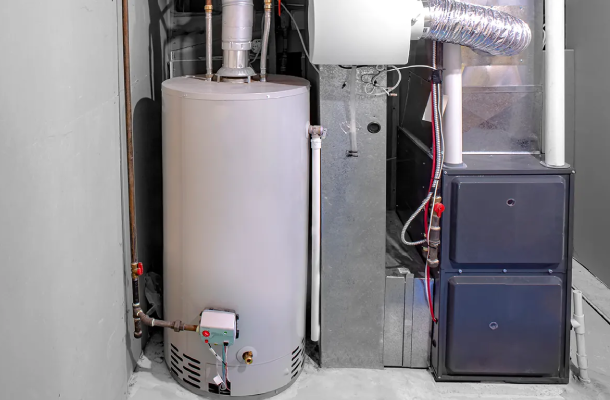

Edmonton's tap water comes from the North Saskatchewan River, and it's extremely hard. Each heating cycle drops some of those minerals out of solution, and they settle as sediment on the tank floor. On a gas unit, that layer traps heat against the steel and causes the popping or rumbling you hear when the burner fires. A yearly flush can sometimes slow the buildup.
Winter adds a different kind of strain. Water from the mains runs much colder in January than in August, so the burner or elements run longer to reach temperature, and recovery drags when everyone showers back to back. That cold water also makes the outside of a gas tank sweat. Condensation dripping onto the burner sizzles and looks a lot like a leak, so we confirm which one you have before recommending anything.
Older houses often share one chimney between the furnace and the water heater. Once a high-efficiency furnace goes in and vents out the side wall through PVC, the water heater is left alone on a flue sized for two appliances unless a liner was installed. Weak draft follows, and flue gases might spill back into the basement. We test draft on every gas install and correct the venting before any gas fired tank goes into service.