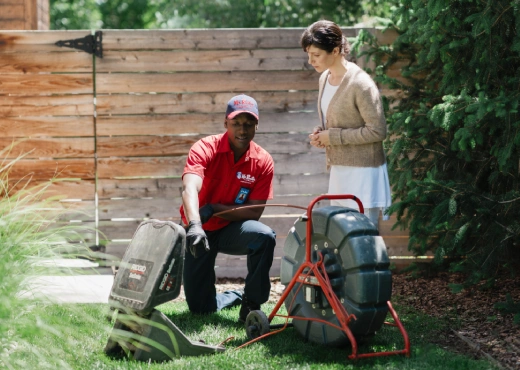

Typically, sewer pipe installation occurs below the frost line in a slightly sloped trench. That slope is a crucial component to the installation process because it will be responsible for proper drainage.
The important steps for Edmonton sewer line installation include:
- Determine depth of trench: When deciding on the exact location of installation, it’s important to mind the necessary depth or elevation because the installation depends on your house foundation and parts of the sewer piping will be buried underneath the concrete slab, along with other plumbing lines. The sewer line typically starts where your main line exits the foundation and then slopes downward when connecting to the city main. Your certified plumber will use specialized equipment to measure the elevation and ensure the slope is correct.
- Slope calculation: Once we have determined the required depth, we have to calculate the required percentage of the initial slope. The minimum required as per law is two percent, but it can also be higher. However, you don’t want wastewater to move too fast as it could easily lead to a clog and other problems.
- Digging and bedding: Unless we’re using a trenchless method for sewer line replacement, a brand-new plumbing installation will likely require us to dig a trench. We’re always careful not to create any severe soil disturbance and do our best to keep the trench as narrow as possible. For bedding purposes, gravel is often used to facilitate the sloping process, whereas soil doesn’t let you maneuver the sewer pipe as easily.
- Installation: During the installation process, plumbers usually start installing the lowest section first and then work their way up. Sections are typically connected with gasket fittings or solvent glue. To minimize risks of leaks, each section should be equipped with a female bell-end that faces uphill. Additionally, the cleanout installation will take place at the same time here, too.
- Final inspection: After Edmonton sewer line installation, it will be necessary to complete a thorough inspection to ensure your sewer piping is well-installed and follows local codes.
- Backfilling: Once the installation has passed inspection, your plumbers will fill the trench compacted layers of soil that prevent settling.
Pro Tip: During installation, we often suggest considering backwater valve installation on your mainline to protect your home from potential sewage backups and floods.