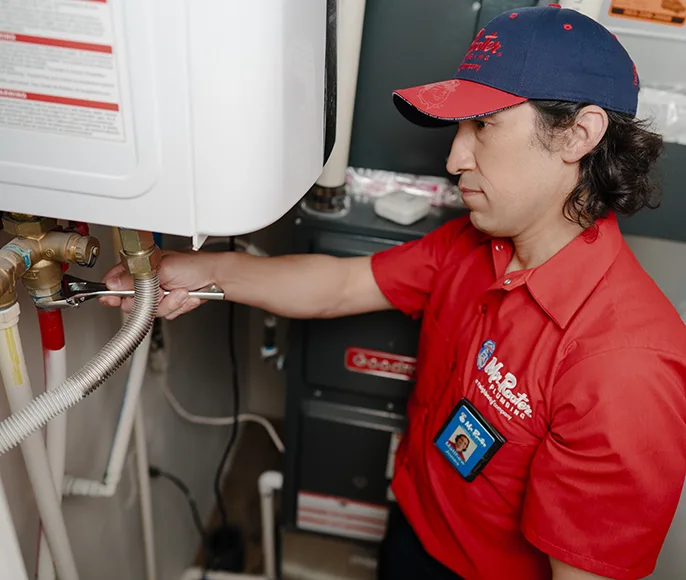
Tankless water heaters heat water on demand as it passes through the unit. Cold water flows into the heater when a hot water tap is turned on. Inside the unit, a heat exchanger, typically powered by electricity or gas, quickly heats the water to the desired temperature. The heating process is triggered by activating a flow sensor, which detects the water flow and signals the heating element to start working. As a result, hot water is delivered continuously and instantaneously. Once the hot water tap is turned off, the tankless water heater shuts off, saving energy by not continuously heating water. The compact size and efficiency of tankless electric water heaters make them attractive for homeowners looking for a more efficient and convenient hot water solution.
Top Benefits of Tankless Water Heaters
Switching to a tankless water heater offers numerous advantages for homeowners. From energy savings to continuous hot water supply, here are the key benefits our expert team is prepared to offer:
- Energy Efficiency – Tankless water heaters are highly energy-efficient, as they only heat water when needed. They can significantly reduce energy consumption and lower utility bills by eliminating the standby heat loss associated with traditional storage tank heaters.
- Endless Hot Water – With a tankless water heater, you never have to worry about running out of hot water. These units provide a continuous hot water supply on demand, ensuring you can enjoy a long, hot shower or run multiple hot water appliances simultaneously without interruptions.
- Space-Saving Design – Electric tankless water heaters are compact and wall-mounted, allowing for flexible installation options. They take up much less space than bulky traditional water heaters, freeing up valuable floor space in your home.
- Longevity – Tankless water heaters are built to last. With proper maintenance, they can have a lifespan of up to 20 years or more, outlasting conventional tank-style water heaters by several years.
- Reduced Risk of Water Damage – Tankless models eliminate this risk, unlike traditional water heaters that can leak and cause significant water damage. Without a large storage tank, the chances of leaks and ruptures are greatly minimized.
- Improved Water Quality – Tankless water heaters provide fresh, clean hot water as they do not store water in a tank for long periods. This helps prevent rust, sediment buildup, and corrosion affecting water quality.
- Eco-Friendly – The energy-efficient operation of tankless water heaters reduces greenhouse gas emissions and contributes to a greener environment. By consuming less energy, these units help reduce your carbon footprint and promote sustainability.