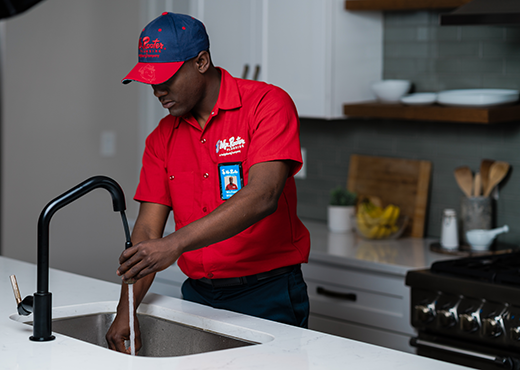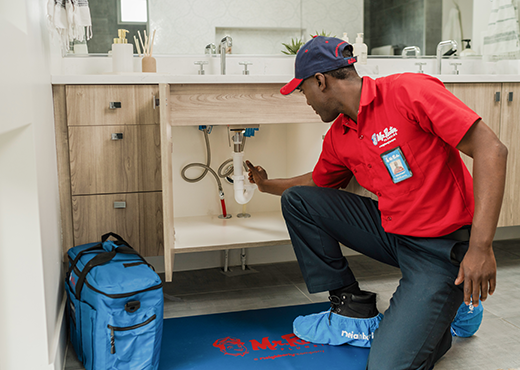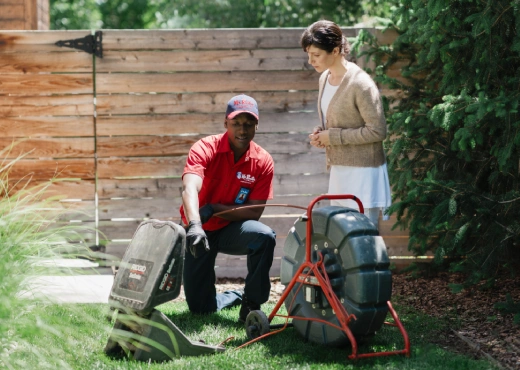
Most drain trouble in Etobicoke starts long before anything backs up. Picture a bungalow built in the 1960s where the kitchen sink and laundry tub clog within a week of each other. A plunger only buys you a day or two. We feed a camera down the main line and find a sagging stretch of clay tile near the foundation wall, where water and grease pool. Once you've watched that footage on our monitor, the choice between relining the section and replacing it gets much easier.
Cast iron tells a different story. If your house still has its original drain stack, the pipe can look fine from the basement while rust works on it from the outside in. The wall thins until a section cracks. You'll usually notice a toilet that gurgles after the upstairs shower runs, or a floor drain that clears for a week and slows down again. We check the stack with the camera. When a section has failed, we cut it out and replace it with new pipe, and if the rust has only thinned the wall, a liner can add a new structural layer from the inside.
Heavy rain exposes weak spots fast. When a storm sends more water into the municipal sewer than it can carry, that water looks for the lowest drain in your house. That's usually the one in the basement floor. After the July and August 2024 storms, the City of Toronto reported basement flooding in more than 1,000 homes. We ask about your floor drain during every inspection for that reason. If your line is sound but sewage keeps coming up the floor drain after storms, we'd recommend a backwater valve over another cleaning.
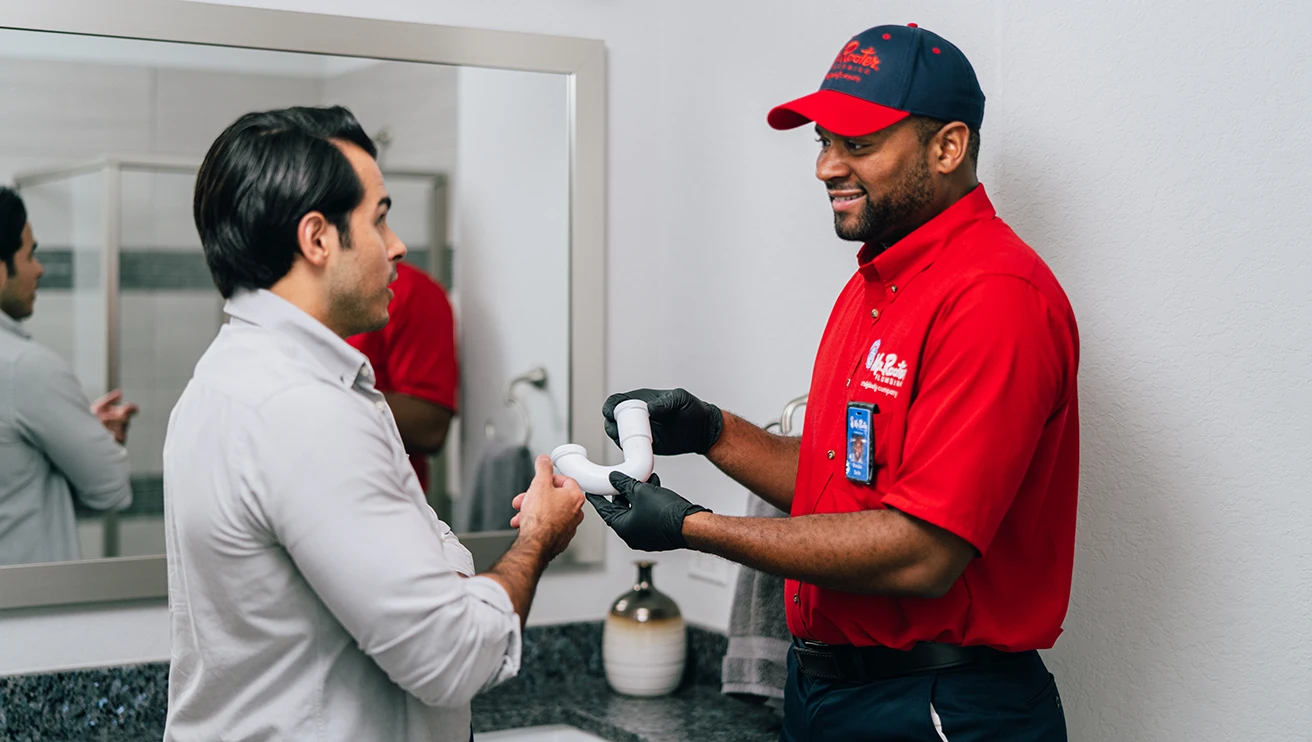
Some leaks hide. When water shows up behind a finished wall or on a ceiling below a bathroom, thermographic imaging helps us narrow down the spot before anyone opens the drywall. A typical visit runs in a simple order. We listen to your symptoms, run the camera to find the break, explain your options in plain language, and handle the permit paperwork when your job needs it. If you decide to go ahead, we use the method that fits the damage: jetting, no-dig repair, relining, or excavation and replacement.
For relining, we use steam-cured fiberglass and a VOC-free epoxy that cures in under an hour. The system can line 90-degree bends and changes in pipe size. A lateral with an awkward turn near your foundation isn't automatically a dig. The finished liner is rated five times stronger than ASTM standards, and that's why we trust it under a house.