This is where trenchless methods come in. When possible, our expert plumbers will conduct trenchless sewer line repairs that require minimal excavation. Instead of digging a massive hole at the site of the broken pipe, the trenchless method entails digging a much smaller hole to reach an easier-to-access pipe that is connected to the damaged area. There are two main trenchless pipe repair methods that we use:
- Pipe relining. Also called structural pipe lining, this trenchless method involves creating a new pipe by lining the inside of your existing one with a soft, flexible sleeve that has been soaked in an epoxy solution. Though this sleeve is soft when inserted, over a few hours, it will harden completely, thereby creating a brand-new pipe.
- Pipe bursting. For pipes with more damage, we’ll use this trenchless repair method. When already damaged to the point where they are no longer holding their shape, they need more than an epoxy liner. Instead, we’ll pull a brand-new pipe through the old one and use hydraulics to fully break apart the original, leaving the new one in its place. This trenchless method is technically a minimally invasive replacement process.
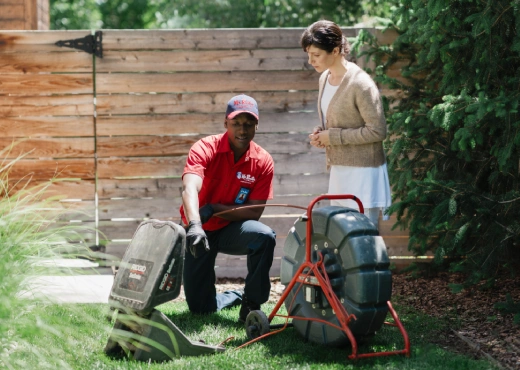
Whether you need pipe relining or bursting, the combination of our tools, equipment, and plumbing knowledge will get the job done right as quickly and efficiently as possible. Some of the specialized
- A video camera can be inserted into the pipe to observe the extent of damage, as well as determine the length of the pipe that needs to be repaired or replaced.
- A winch with a bursting head attachment to pull a new pipe through the old one and break up the original pipe around it.
Common Types of Sewer Line Damage We Fix
Many of our customers hear about Calgary trenchless sewer repair and wonder how they could possibly know if they need this service. While hairline cracks in your underground sewer lines can develop without any warning signs, over time, the problem will always let you know it exists.
If you live in a relatively new home in Calgary, you can be fairly certain that your sewer lines are in good working order—for the time being, at least. However, if your Calgary home is a few decades old or more, there’s a much higher chance that something could go wrong. Some common causes of cracked or leaking sewer lines include:
Tree root intrusion. Did you know that tree roots extend horizontally between two to three times the height of their canopy? This means that a twenty-year-old weeping willow tree in your neighbour’s backyard likely has roots on your Calgary property that you aren’t even aware of. Contrary to popular belief, tree roots do not cause damage to underground lines but instead exacerbate an existing problem. Roots are naturally attracted to water, oxygen, and nutrients. A sewer line with a hairline fracture will release the former and the latter into the soil, attracting the root and causing it to pry the hole open further.
Frequent freezing and thawing. While Calgarians like to boast about their weather in comparison to their snowier and often colder neighbours up in Edmonton, we get our fair share of severe Canadian weather, too. In fact, the temperature in Calgary can change drastically at the drop of a hat, causing multiple periods of thawing and freezing to occur each year. Depending on the material of your pipes, this process can cause them to age and deteriorate more quickly than you might expect.
Incorrect installation. Even if you’ve recently moved into a newly built home in Calgary, leaking sewer lines are still a possibility. If they weren’t installed correctly during construction, their joints might become loose, resulting in leaks. As part of our trenchless methods, the plumbing inspection camera will help determine the state of the original installation.
If you see any of the following warning signs, you need Calgary trenchless sewer repair due to deteriorating pipes or tree root invasions, it’s time to invest in professional plumbing services in Calgary.
- Slow drainage. Is your sink or tub draining very slowly in Calgary? This may be because a tree root has caused a clog in your drains, and the wastewater has nowhere else to go.
- Gurgling sounds when flushing. When your plumbing’s pressure is altered, air will be pushed back up the drain, causing a gurgling sound.
- Unpleasant odours. This one’s pretty obvious. Nauseating smells coming from places that they shouldn’t be is a big warning sign that you have a plumbing emergency. Choosing to ignore the smell could result in a sewer backup, which is the last thing you want.
- Puddles in your yard. If you’ve noticed water puddling in your grass in one particular area, there may be a leaky pipe located nearby. Greener grass in one area also indicates a compromised sewer line. As gross as it is, sewer line leaks make great fertilizers.